+8613902808995
 +86 13902808995
 siwenchen@chinawellcamp.com
SOEASY is one of WELLCAMP's brands, it is special for the houses easy to build, like the folding container house, flat pack container house, expandable container house, prefab k house and Sudan house.
SOEASY


Folding container houses are designed for fast installation and convenient transportation, but buyers often have an important question before placing an order: can a folding container house withstand strong winds and heavy rain?
The answer is yes, provided that the house is properly designed, manufactured, installed, and secured for the local weather conditions. A well-built folding container house uses a galvanized steel frame, weather-resistant wall panels, a suitable roof structure, and properly sealed connections to help protect the interior from wind and rain.
For example, SOEASY folding container house models feature galvanized and painted steel structures, insulated sandwich panel walls, and roof systems designed for practical outdoor use. Selected models on the website specify wind resistance of up to 120 km/h. However, actual performance depends on the product configuration, foundation, anchoring method, installation quality, and local building requirements.
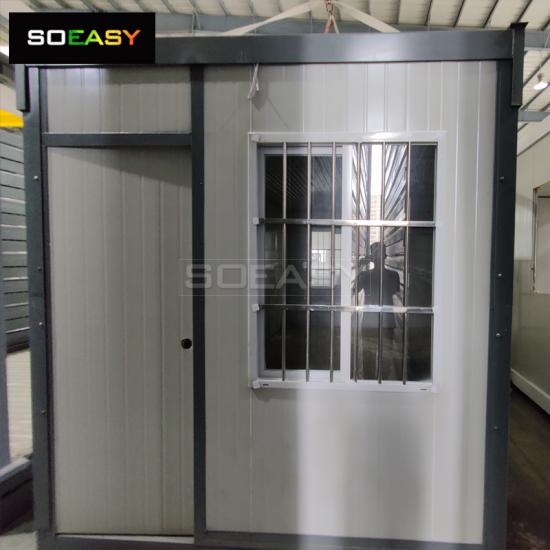
A folding container house can withstand strong winds when its structural frame, connections, roof, and foundation are designed for the expected wind load. The steel frame is particularly important because it supports the wall panels and transfers external forces through the structure to the supporting foundation.
SOEASY folding container houses use galvanized steel structures with a painted surface. Galvanization helps protect the steel against corrosion, while the structural frame provides the main support for the building. The wall and roof panels complete the enclosure and help protect the interior from outdoor conditions.
According to the specifications published for selected SOEASY folding container house models, the stated wind resistance can reach 120 km/h, with a Grade 11 wind resistance rating. This provides buyers with a useful reference when evaluating products for areas exposed to strong winds.
However, a published wind-resistance figure should not be treated as a universal guarantee. Buyers should confirm the test basis, structural configuration, anchoring requirements, and applicable local wind-load standards for the exact model they intend to purchase.
For projects in coastal areas, open fields, construction sites, or other exposed locations, it is especially important to check the structural design before installation. You can explore the available folding container house models to compare product configurations and discuss project requirements with the manufacturer.
Wind resistance does not come from a single material. It depends on how the entire building system works together. When evaluating a folding container house, buyers should pay attention to several structural details.
Galvanized steel frame: The steel frame is the main load-bearing structure. Its material thickness, connection design, welding quality, and overall configuration affect the building's ability to handle wind pressure and other external forces. Galvanized and painted surfaces also help reduce the risk of corrosion during long-term outdoor use.
Secure folding connections: Folding container houses include movable sections and connecting components. Once the unit is opened, these components must be properly positioned and secured. Incorrect assembly or loose connections can affect the stability of the completed structure.
Wall and roof panels: Sandwich panels and metal roof sheets form the building enclosure. Their fixing points and connection details matter because strong winds can create pressure and suction forces on external surfaces. A properly installed panel system helps reduce the risk of panel movement or detachment.
Foundation and anchoring: Even a well-designed steel structure needs a suitable supporting base. Depending on the site and local wind conditions, the house may require concrete supports, ground anchors, or another engineered fixing solution. Buyers should not assume that the building can simply be placed on any flat surface without additional securing.
For a closer look at the structure and configuration of SOEASY products, see the steel structure folding container house.
Folding container houses are designed to provide protection from rain, but waterproof performance depends on more than the roof material alone. The roof panels, wall joints, window frames, door openings, corner connections, and drainage arrangements all contribute to keeping water outside.
SOEASY folding container house models use metal roof sheets and insulated wall panels. The product information also describes the houses as having waterproof performance. These construction features help create a protective enclosure for temporary accommodation, site offices, worker housing, and other modular building applications.
Nevertheless, heavy or prolonged rainfall can expose weaknesses in poorly installed joints, damaged sealants, blocked drainage paths, or incorrectly fitted windows and doors. For this reason, buyers should check how the roof and wall connections are sealed and how rainwater is directed away from the building.
A waterproof building enclosure should manage water in several ways:
For projects that require additional space or a different room layout, buyers can also review SOEASY's expandable container house range and confirm the weatherproofing details of the selected configuration.
The roof and wall materials play an important role in the weather resistance of a folding container house. Buyers should review the actual material specifications rather than relying only on general descriptions such as waterproof or weather-resistant.
For example, a SOEASY folding container house configuration published on the website includes a roof made of corrugated color steel sheet, glass wool with aluminum foil, a ceiling sheet, and galvanized square tubing. Its wall system uses insulated IEPS sandwich panels. Other models may have different panel thicknesses or material combinations, so specifications should always be checked against the selected product.
Metal roof sheets provide the external roof covering and help shed rainwater. Their fixing method, overlaps, and connection details are important for preventing water penetration.
Insulation layers such as glass wool can improve thermal performance and help create a more comfortable indoor environment. However, insulation itself should not be confused with waterproofing. The external roof layer and its joints remain responsible for keeping rain out.
Sandwich panel walls combine external and internal surfaces with an insulating core. Correct installation and sealed panel connections help protect the interior from wind-driven rain.
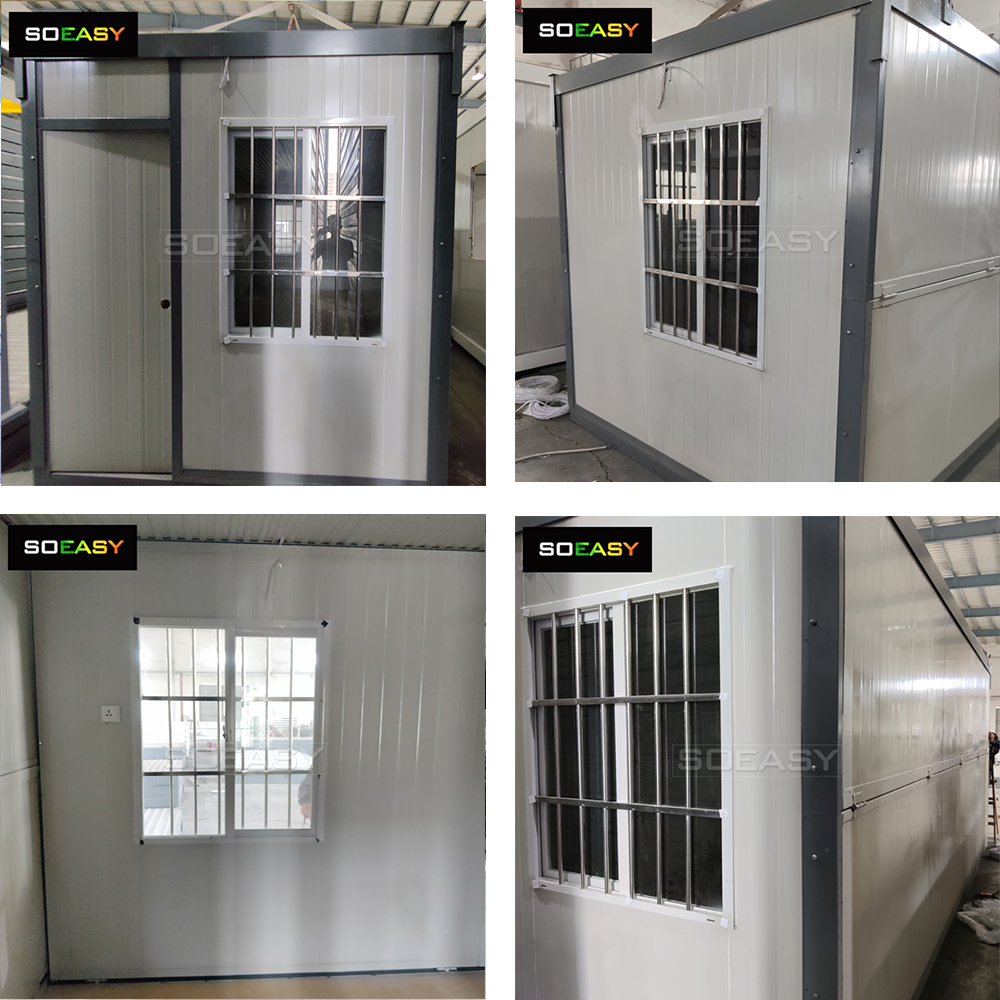
When comparing products, ask the manufacturer for the roof sheet thickness, wall panel thickness, insulation material, panel connection details, and available sealing options. These details make it easier to assess whether a folding container house is suitable for a particular climate.
Yes. Installation quality has a direct effect on the actual weather resistance of a folding container house. A product may have a suitable structural design, but poor site preparation or incomplete assembly can reduce its performance.
Before installation, the ground should be checked for stability, drainage, and level differences. The supporting base must be suitable for the building's weight and local ground conditions. In areas with strong winds, the anchoring method should be confirmed according to the manufacturer's instructions and the project's engineering requirements.
During assembly, installers should pay particular attention to the following details:
SOEASY folding container houses are designed for convenient assembly. The product information for selected models describes a quick installation process. However, fast installation should not replace proper structural fixing, weatherproofing checks, or site-specific preparation.
Folding container houses can be considered for coastal locations and regions with frequent heavy rainfall, but the product configuration should match the local environment. Coastal sites often face a combination of strong winds, salt-laden air, high humidity, and frequent rain. These conditions place additional demands on steel protection, fasteners, joints, and maintenance.
For coastal projects, buyers should pay particular attention to corrosion protection. Galvanized steel and suitable protective coatings can help reduce corrosion, but the required protection level depends on the exposure conditions. Hardware, cut edges, weld areas, and connection points should also be considered.
For high-rainfall regions, roof drainage, external sealing, site elevation, and ground drainage are important. If the building will be installed in an area prone to flooding, the supporting foundation and finished floor level should be designed according to the site's flood risk. A standard folding container house should not automatically be considered flood-proof.
For projects such as temporary worker accommodation, construction offices, and remote site facilities, SOEASY can help buyers review the suitable prefabricated folding sandwich panel container house configuration based on the intended application and local weather conditions.
Before purchasing a folding container house for a location exposed to strong winds or heavy rain, buyers should request clear technical information from the manufacturer. A general statement about wind resistance or waterproof performance is not enough for projects with specific weather requirements.
Use the following checklist when comparing suppliers:
Providing the manufacturer with the project location, intended use, expected wind conditions, rainfall level, and installation environment will make it easier to identify a suitable product configuration. You can contact SOEASY to discuss your project requirements and request product details.
Yes. A properly designed and installed folding container house can provide reliable protection against strong winds and heavy rain within its specified performance limits. Key factors include the strength of the galvanized steel frame, secure structural connections, suitable roof and wall panels, effective joint sealing, proper drainage, and secure foundation anchoring.
SOEASY offers folding container house models featuring galvanized steel structures, insulated sandwich panel walls, and weather-resistant construction. Selected models published on the website specify wind resistance of up to 120 km/h. Buyers should confirm the exact model specifications and installation requirements before using this figure for project planning.
For construction sites, worker accommodation, temporary offices, and other modular building projects, choosing a folding container house should involve more than comparing price and installation speed. Matching the structure and weatherproofing details to the local climate is essential for long-term performance.
Can a folding container house withstand strong winds?
Yes. A folding container house with a properly designed steel frame, secure connections, and suitable foundation anchoring can withstand strong winds within its rated limits. Selected SOEASY models specify wind resistance of up to 120 km/h. Buyers should confirm the rating and installation requirements for the exact model.
Are folding container houses waterproof in heavy rain?
Folding container houses are designed to protect the interior from rain through their roof sheets, wall panels, and sealed connections. Actual waterproof performance depends on correct installation, joint sealing, roof drainage, and regular maintenance.
What materials help a folding container house resist bad weather?
Common weather-protection components include galvanized steel frames, coated metal roof sheets, insulated sandwich panel walls, sealed joints, and suitable door and window systems. The exact materials and thicknesses vary by model.
Is a folding container house suitable for coastal areas?
It can be suitable for coastal applications when the steel protection, fasteners, structural design, and installation method are selected for the local exposure conditions. Additional corrosion protection and regular maintenance may be necessary.
Does a folding container house need a concrete foundation?
Not every project requires the same foundation. The suitable base depends on the ground conditions, building configuration, local wind loads, and anchoring requirements. Concrete supports or other engineered foundations may be recommended for certain sites.
How can buyers improve the rain resistance of a folding container house?
Buyers should ensure that roof panels and joints are correctly installed, doors and windows are properly sealed, drainage paths remain clear, and the building is positioned on a suitable base. Regular inspections help identify potential leaks before they become serious problems.
For all requests, you can contact us :


 IPv6 network supported
Scan to wechat: