+8613902808995
 +86 13902808995
 siwenchen@chinawellcamp.com
SOEASY is one of WELLCAMP's brands, it is special for the houses easy to build, like the folding container house, flat pack container house, expandable container house, prefab k house and Sudan house.
SOEASY


Prefab houses can reduce construction time, improve factory quality control, and offer a practical alternative to traditional on-site construction. But buying a prefab house is not simply a matter of comparing the advertised price with the cost of a conventional home.
The total project cost can also include land preparation, foundations, transportation, utility connections, permits, installation, and other site-related expenses.
There is another important consideration: “prefab house” is a broad term. Modular homes, manufactured homes, panelized homes, and container-based housing can have very different construction standards, regulations, financing options, and installation requirements.
This guide explains the main disadvantages and hidden costs of prefab houses so buyers can evaluate a project before placing an order.
The advertised factory price is not the same as the total project cost.
Land preparation, foundations, utilities, permits, transportation, and installation can add significant expenses.
Zoning and building requirements vary by location and by type of prefab construction.
Financing and appraisal requirements depend on how the property is classified and whether the home is permanently attached to owned land.
Customization is possible, but structural modifications may be limited after manufacturing.
Modular, manufactured, panelized, and container-based homes should not be treated as the same type of construction.
A reliable manufacturer should provide clear specifications, installation requirements, warranty information, and project documentation before you buy.
“Prefab” or “prefabricated” describes a broad category of buildings in which some or most components are manufactured in a factory before being transported to the final site.
Depending on the construction system, prefab housing can include:
Modular homes
Manufactured homes
Panelized homes
Sectional homes
Container-based houses
Folding or relocatable housing systems
These categories are not interchangeable.
For example, in the United States, manufactured homes are regulated under the federal HUD Manufactured Home Construction and Safety Standards, while modular homes are generally constructed according to applicable state and local building codes.
Therefore, buyers should first identify exactly what type of prefab building they are purchasing.
One of the most common mistakes buyers make is comparing the manufacturer's quoted house price with the price of a traditional building without considering site-related costs.
A complete prefab project may involve:
Land purchase or lease
Site preparation
Foundation
Drainage
Electrical connection
Water supply
Sewer or septic system
HVAC installation
Transportation
Crane or unloading equipment
On-site assembly
Local permits and inspections
Landscaping and external works
For this reason, ask the manufacturer for a complete project quotation rather than only a factory ex-works or FOB price.
Before ordering, ask:
What is included in the quoted price?
Is transportation included?
Is installation included?
Is the foundation included?
Are electrical and plumbing connections included?
Which permits are the buyer responsible for?
What site preparation is required?
What equipment is needed for unloading or installation?
A clear scope of supply can prevent unexpected costs later.
Prefab construction can reduce on-site construction time, but it does not eliminate site preparation.
The site may need:
Leveling
Soil preparation
Drainage
Foundation work
Access roads
Utility connections
Stormwater management
Crane access
Temporary storage space
The installation requirements depend on the building system, site conditions, local regulations, and manufacturer specifications.
HUD's consumer guidance for manufactured homes, for example, emphasizes site preparation, access, foundation systems, anchoring, zoning, permits, and utility hookups as important parts of the installation process.
A prefab building cannot necessarily be installed on every piece of land.
Local authorities may regulate:
Land use
Building type
Minimum floor area
Setbacks
Building height
Foundation requirements
Fire safety
Energy efficiency
Electrical and plumbing systems
Septic systems
Temporary versus permanent occupancy
The rules also vary depending on whether the building is classified as a modular home, manufactured home, temporary structure, container building, or another type of construction.
Check the site regulations before purchasing the building.
Ideally, obtain written confirmation from the relevant local authority regarding whether the proposed building type is permitted on the property.
This is especially important for buyers importing prefab or container-based buildings from another country.
Factory-built structures must eventually reach the installation site.
Transportation costs depend on:
Distance
Building dimensions
Number of modules
Weight
Road restrictions
Oversized-load requirements
Port and customs procedures
Site accessibility
Local transportation permits
A building that is inexpensive at the factory can become significantly more expensive if the destination is remote or difficult to access.
For international buyers, transportation should therefore be evaluated as part of the total landed project cost rather than as a separate afterthought.
Factory production can provide better consistency and quality control, but installation remains important.
Potential installation problems include:
Incorrect leveling
Poor foundation preparation
Incorrect structural connections
Water leakage
Improper sealing
Electrical or plumbing connection problems
Incorrect anchoring
Transportation damage
For manufactured housing, HUD specifically identifies foundation systems, anchoring, site access, permits, and utility hookups as important installation considerations.
For other prefab systems, buyers should follow the manufacturer's installation instructions and use contractors familiar with the specific building system.
Financing is not automatically difficult for every prefab house.
The financing process depends on factors such as:
The type of factory-built home
Whether the home is permanently attached to land
Whether the land is owned or leased
Local property classification
Building code compliance
Foundation type
Lender requirements
For example, Fannie Mae provides financing options for qualifying manufactured homes, including Standard MH and MH Advantage products.
For modular and other factory-built homes, appraisal requirements also consider the home's quality, characteristics, marketability, and comparable properties.
Speak with lenders before placing a major deposit.
Ask the lender:
Is this building eligible for financing?
Will it be classified as real property?
Does the lender require a permanent foundation?
What documentation is required from the manufacturer?
How will the property be appraised?
Prefab construction does not mean that every home is completely standardized.
Many manufacturers offer customization such as:
Floor-plan changes
Door and window options
Exterior finishes
Interior finishes
Insulation packages
Electrical configurations
Plumbing layouts
HVAC options
Accessibility features
However, customization becomes more difficult after manufacturing begins.
Structural modifications may also be limited by the engineering design of the building.
Therefore, buyers should finalize important requirements before production starts.
Before ordering, ask:
Can the floor plan be changed?
Can doors or windows be relocated?
Can additional rooms be added later?
Can the building be expanded?
Can the roof design be modified?
Can additional insulation be installed?
Can the building be relocated in the future?
The answers depend on the specific construction system.
It is misleading to say that all prefab houses depreciate or that all prefab houses appreciate at the same rate.
Property value depends on multiple factors, including:
Land ownership
Property classification
Foundation
Building quality
Location
Local housing demand
Condition
Comparable sales
Financing availability
Market perception
For qualifying factory-built housing, appraisal does not necessarily require a direct comparison only with other factory-built homes. Fannie Mae's guidance allows appraisers to consider appropriate comparable sales based on the property and market.
Therefore, buyers should evaluate the complete property, not only the factory-built structure.
A major mistake is treating every prefab building as the same.
| Building Type | Typical Advantage | Potential Limitation |
|---|---|---|
| Modular Home | High design flexibility and permanent construction | More site work and permitting |
| Manufactured Home | Efficient factory production and established U.S. standards | Classification and installation requirements |
| Panelized Home | Flexible design and efficient factory production | More work is completed on site |
| Container House | Fast deployment and modular configuration | Local regulations and insulation requirements |
| Folding Container House | Compact transportation and rapid assembly | Design and structural configuration depend on the system |
The best option depends on the project's purpose, location, budget, installation conditions, and expected service life.
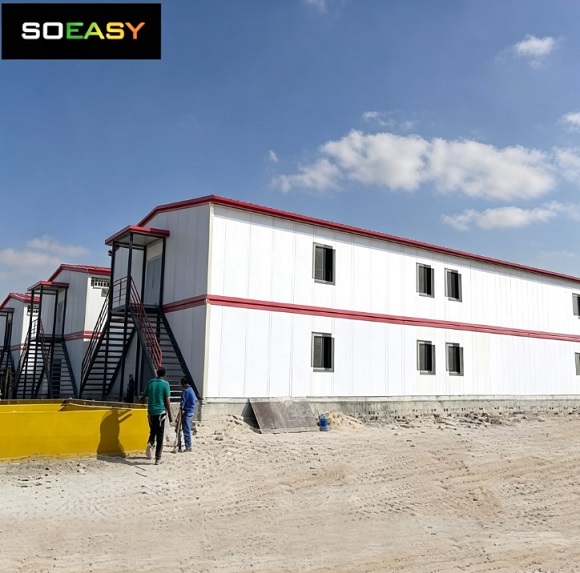
Prefab construction can be particularly attractive when speed, repeatability, transportation efficiency, or controlled factory production are important.
Typical applications include:
Worker accommodation
Mining camps
Construction camps
Remote workforce housing
Site offices
Temporary classrooms
Emergency accommodation
Agricultural accommodation
Commercial accommodation
Residential projects
For projects that require multiple units, factory production can also make it easier to standardize layouts, materials, and installation procedures.
Before signing a purchase contract, use the following checklist.
Know whether you are purchasing a modular, manufactured, panelized, container-based, or another type of building.
Check zoning, permits, foundation requirements, fire regulations, and utility requirements.
Ask for:
Structural specifications
Materials
Wall and roof systems
Insulation specifications
Electrical system
Plumbing system
Doors and windows
Flooring
Fire-safety information
Applicable certifications
Do not compare factory prices alone.
Include:
Building + Transportation + Foundation + Site Preparation + Installation + Utilities + Permits + External Works
Ask for:
Factory information
Production capacity
Previous projects
Quality-control procedures
Certifications
Warranty terms
Installation support
Clarify:
Delivery terms
Incoterms
Production schedule
Payment schedule
Warranty
Replacement policy
Installation responsibilities
Site requirements
After-sales support
Prefab houses can be a good solution when the project prioritizes construction speed, factory-controlled production, repeatable quality, transportation efficiency, or rapid deployment.
However, they are not automatically cheaper or easier in every situation.
The right question is not:
“Are prefab houses good or bad?”
A better question is:
“Is this specific prefab construction system suitable for my site, budget, regulations, and intended use?”
Before buying, evaluate the complete project cost, local regulations, foundation requirements, transportation, installation, financing, customization, and long-term use.
For commercial and workforce accommodation projects, systems such as folding container houses, flat-pack container houses, and expandable container houses can provide different advantages depending on the project requirements.
Not necessarily. Factory production can reduce certain construction costs, but the total project cost also depends on land, foundation, utilities, transportation, permits, installation, and site preparation.
Yes. SOEASY provides flexible customization services for layouts, doors, windows, insulation, electrical systems, finishes, and more. Our design team can create CAD and 3D drawings based on your project requirements.
Do prefab houses lose value faster than traditional houses?
Not necessarily. Value depends on the building type, land ownership, location, construction quality, foundation, market conditions, and comparable properties. Factory-built housing should not be treated as one single property category.
Service life depends on the structural system, materials, manufacturing quality, installation, climate, and maintenance. Buyers should evaluate the manufacturer's specifications, warranty, applicable standards, and expected service conditions rather than relying on a single universal lifespan number.
At minimum, check:
Building classification
Local zoning and permits
Foundation requirements
Site conditions
Transportation requirements
Installation method
Total project cost
Manufacturer qualifications
Warranty
After-sales support
A prefab house can be an efficient alternative to conventional construction, but the factory price is only one part of the investment.
The best buying decision comes from understanding the complete project, including the building system, site, regulations, transportation, foundation, installation, financing, and long-term requirements.
If you are comparing different prefabricated housing options, SOEASY—a reliable Chinese manufacturer of container homes—offers a range of solutions, including foldable container homes, expandable container homes, flat-pack container homes, K-style modular houses, and other modular housing products. As an experienced manufacturer, SOEASY provides end-to-end services tailored to specific project requirements, including custom design, factory production, quality control, and installation guidance.
For all requests, you can contact us :


 IPv6 network supported
 Scan to wechat: